About Dr. John Health Plans Blog Contact Book an Appointment
Relief
Conditions We Treat

Shoulder Pain & Rotator Cuff
Treatment in San Mateo

A precise, muscle-by-muscle protocol for the rotator cuff — built for patients who've tried rest, physical therapy, or surgery and still aren't back to 100%.

✓ 89+ Five-Star Reviews
✓ No Drugs or Surgery
✓ 16+ Years Treating Shoulder & Rotator Cuff Injuries
✓ Serving San Mateo Since 2010
Shoulder Pain & Rotator Cuff Injuries

A stiff shoulder is rarely
just a stiff shoulder

Shoulder pain is one of the most limiting injuries a person can deal with. It affects your sleep, your ability to lift and reach, your workouts, and even simple things like getting dressed. At High Amplitude Health in San Mateo, Dr. John Blenio has helped hundreds of people recover from rotator cuff injuries, frozen shoulder, impingement, and chronic shoulder dysfunction — without surgery or medication.

Whether you're a CrossFit athlete, a baseball pitcher, a weekend warrior, or someone who simply woke up one day unable to raise their arm, the approach is the same: find the true source of the problem and fix it with hands-on care. Dr. Blenio combines Active Release Therapy and myofascial therapy to target tight fascia, scar tissue, and nerve irritation at their origin — muscle and tendon work does the heavy lifting here, with chiropractic adjusting added only when a stiff upper spine is limiting how far the shoulder can move.

Rather than just managing pain, we work directly on the rotator cuff muscles, scapular stabilizers, and surrounding soft tissues — restoring mobility, reducing inflammation, and building the foundation for lasting relief. Most patients describe the sessions as "hurts so good" — deeply effective without ever being uncomfortable.

Dr. Blenio's core protocol uses Active Release Therapy and myofascial therapy on the entire rotator cuff group — the teres minor, infraspinatus, supraspinatus, and subscapularis — released in a specific, step-by-step sequence he's refined over 16 years. If progress plateaus, a secondary protocol addresses the pectoralis muscles, lateral deltoids, and subclavius, which often lock down alongside the rotator cuff. From there, sustained-pressure myofascial therapy releases the larger muscle groups that tend to tighten in response — the upper trapezius, rhomboids, upper thoracic postural muscles, and cervical spinal muscles.
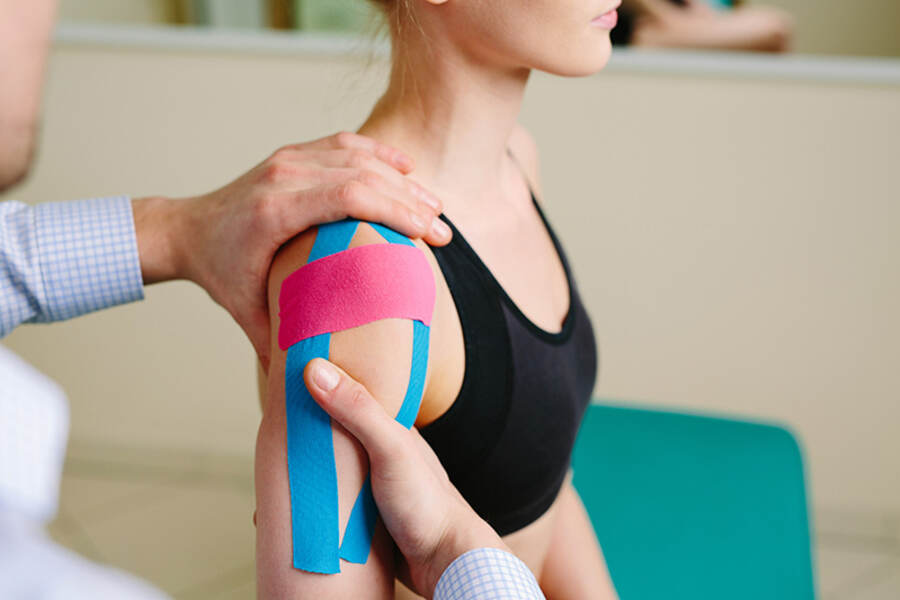
KT taping for shoulder and rotator cuff injury at High Amplitude Health San Mateo
No Surgery Required
Chiropractic · ART · Myofascial therapy
How We Treat It

Built around Active Release —
not just an adjustment

◎
Active Release Therapy (ART)
ART is the cornerstone of Dr. Blenio's shoulder treatment — a precise, step-by-step protocol targeting the full rotator cuff group: the teres minor, infraspinatus, supraspinatus, and subscapularis. If progress plateaus, a secondary protocol brings in the pectoralis muscles, lateral deltoids, and subclavius, which often tighten alongside the cuff.
Backed by the Journal of Sport Rehabilitation: Active Release Technique improves both patient and clinician outcomes for shoulder conditions. Especially effective for impingement, tears, and overuse syndromes.
◈
Myofascial release
Once the rotator cuff itself is addressed, sustained-pressure myofascial therapy releases the larger muscle groups that lock down alongside it — the upper trapezius, rhomboids, upper thoracic postural muscles, and cervical spinal muscles. These almost always tighten in response to a shoulder injury and need to be released too.
Research in the Journal of Bodywork and Movement Therapies confirms trigger point therapy significantly reduces shoulder pain — and results from the Journal of Strength and Conditioning Research show myofascial release improves range of motion in athletes.
⟳
Chiropractic adjusting
Adjusting isn't required to resolve a shoulder or rotator cuff injury — the muscle and tendon work above does the heavy lifting. But a spine that moves freely through its full range, especially in the upper thoracic and cervical regions, makes it easier for the shoulder and scapular joints to reach full range of motion too.
An optional but often valuable addition once the muscle and tendon work is underway — not a substitute for it.
▷
Exercise therapy & conditioning
Conditioning the muscles is the final step. Dr. Blenio personally walks every patient through one or two exercise therapy sessions, teaching you exactly what to do at home or in the gym to keep the shoulder strong and stable for good.
Short on time for a home routine? Most patients get to about 100% doing their conditioning right in the office instead — just three weeks, once or twice a week.
▸
Percussion therapy
Targeted vibration calms the hyperactive muscles around the shoulder girdle — the upper traps, rhomboids, and posterior rotator cuff — reducing guarding, improving circulation, and accelerating tissue recovery between sessions.
Particularly effective for patients with chronic muscle spasm around the shoulder who can't initially tolerate deeper manual work, allowing treatment to progress faster.
Who It Helps

Torn, frozen,
or just overworked?

Shoulder pain and rotator cuff injuries have many causes — and pinpointing the right one is the key to effective treatment. Here are the most common conditions we see and treat every day.

01

Rotator cuff tears & impingement

The rotator cuff is four muscles working together to stabilize and move your shoulder. Tears — partial or full — and impingement syndrome (where tendons get pinched during arm movement) are among the most common shoulder injuries we treat. ART and myofascial therapy can resolve these without surgery in many cases. Not sure which one you're dealing with? See our guide on telling a rotator cuff tear from shoulder impingement.

02

Frozen shoulder (adhesive capsulitis)

Frozen shoulder develops when the joint capsule thickens and tightens, severely restricting range of motion. It's painful, frustrating, and often mismanaged with rest alone. Hands-on myofascial work and progressive mobilization are among the most effective treatments available.

03

Biceps tendonitis

Inflammation of the biceps tendon causes pain at the front of the shoulder that worsens with lifting, overhead activity, or even turning the palm upward. ART directly addresses the tendon and surrounding tissue — reducing inflammation and restoring pain-free function.

04

Shoulder strains & sprains

Whether from a single incident or accumulated overuse, strained muscles and sprained ligaments in the shoulder respond well to soft tissue therapy and guided rehabilitation. Early treatment prevents acute injuries from becoming chronic problems.

05

Shoulder dislocations & post-dislocation instability

After a dislocation, the surrounding muscles and connective tissue often remain compromised — leaving the joint vulnerable to re-injury. Targeted rehab and soft tissue work rebuild stability and confidence in the shoulder.

06

Sports & athletic overuse injuries

CrossFit athletes, swimmers, baseball pitchers, and tennis players all place repetitive high-demand loads on the shoulder. Dr. Blenio treats both the injury and the movement pattern that caused it — getting athletes back to training faster and more durably than rest alone.

07

General stiffness & chronic shoulder dysfunction

Not all shoulder pain has a clear diagnosis. Many patients come in with persistent stiffness, aching, or reduced range of motion that's been building for months or years. A thorough assessment identifies the contributing factors — and treatment addresses all of them together.

08

Labrum tears & post-surgical recovery

Labrum tears and shoulder surgery both leave the muscles and tendons around the joint tight and undertreated by exercise alone. Many patients arrive after a year or more of physical therapy that never got them all the way back — and reach 100% within a handful of visits once the rotator cuff protocol is added.

Built for the shoulder
that hasn't healed yet.

Most shoulder patients see meaningful improvement within 5 to 10 sessions of hands-on work — how many depends more on the injury's severity than whether it's new or long-standing. Chronic injuries often fall in that same range too, since progress there means chipping away at built-up muscle tension and restoring pliability to scarred tissue.

3–6
Average sessions to resolution
89+
Five-star Google reviews

Serving San Mateo, Burlingame, Foster City, Redwood City, Belmont & surrounding areas since 2010.

Book Your First Visit →
About Dr. John Blenio

16 years refining
a rotator cuff protocol

Dr. John Blenio has been treating shoulder pain and rotator cuff injuries in San Mateo for over 16 years. His approach goes well beyond what a standard chiropractor offers — a step-by-step protocol built around Active Release Therapy, myofascial release, and targeted rehab exercises, addressing every muscle and tendon layer contributing to your shoulder dysfunction.

Shoulder injuries are rarely just one thing. Dr. John's protocol starts with the rotator cuff group itself — the teres minor, infraspinatus, supraspinatus, and subscapularis — using Active Release Therapy and myofascial therapy in a specific sequence. If progress plateaus, he adds a secondary protocol for the pectoralis muscles, lateral deltoids, and subclavius, then sustained-pressure myofascial work on the upper trapezius, rhomboids, upper thoracic muscles, and cervical spine — all of which tend to lock down alongside a shoulder injury. Chiropractic adjusting isn't required for shoulder or rotator cuff pain itself, but keeping the upper thoracic and cervical spine mobile helps the shoulder and scapular joints move through their full range too. Once that work is done, he personally teaches every patient the conditioning exercises needed to keep the shoulder strong — whether you'd rather do them at home, in the gym, or right in the office.

Whether your shoulder pain started from a specific incident or has been creeping up over months of overuse, the goal is the same: identify the true cause, correct it with hands-on care, and give you the tools to keep it from coming back.

✓
Active Release Therapy (ART) Certified A step-by-step protocol for the teres minor, infraspinatus, supraspinatus & subscapularis
✓
Myofascial & Trigger Point Therapy Specialist Releasing scar tissue, muscle spasm, and fascial restrictions in the shoulder
✓
Shoulder Rehab & Sports Injury Specialist Rebuilding rotator cuff strength and movement quality for lasting results
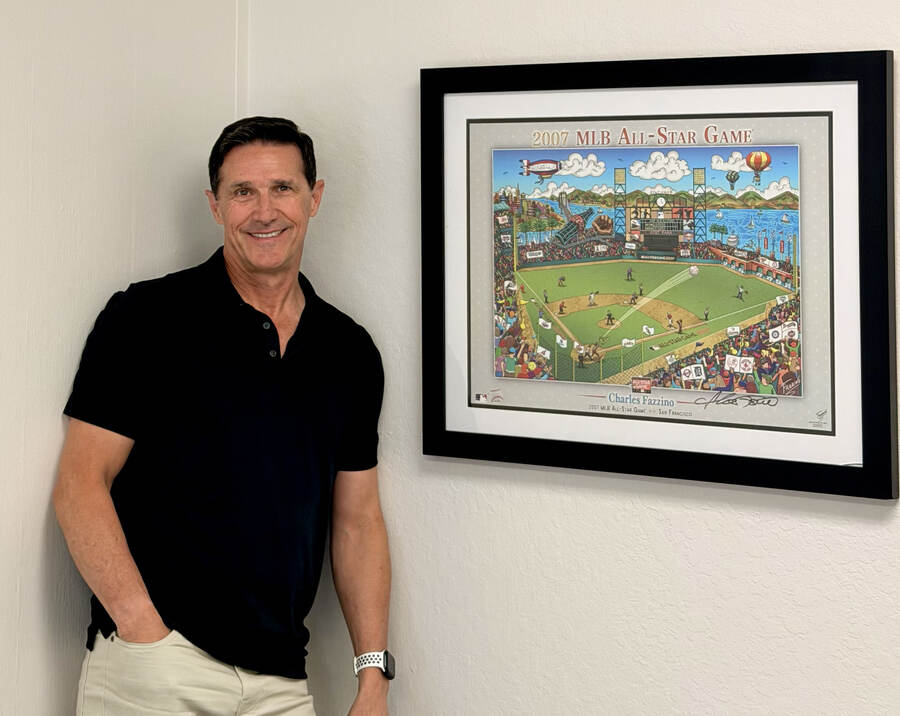
Dr. John Blenio treating shoulder pain at High Amplitude Health San Mateo
Frequently Asked Questions

What people usually ask
about their shoulder

Can chiropractic care treat a rotator cuff tear without surgery? +
In many cases, yes. Not all rotator cuff tears require surgery. Partial tears and many full-thickness tears in non-surgical candidates respond very well to conservative care — particularly ART and myofascial therapy combined with targeted rehab. Dr. Blenio will give you an honest assessment at your first visit and let you know whether your injury is appropriate for conservative treatment or whether imaging and a surgical consult would be worthwhile. If you're still trying to figure out which injury you have, read our comparison of rotator cuff tear vs. shoulder impingement symptoms.
How many sessions will I need? +
It depends more on the injury's severity than whether it's new or long-standing. A severe acute injury can sometimes need the full 5 to 10 sessions of hands-on work, with exercise therapy added afterward or alongside it to fully restore strength and stability. A chronic issue often falls in that same 5-to-10 range too, since progress there means gradually chipping away at built-up muscle tension and restoring pliability to scarred tissue. Dr. Blenio will give you a realistic estimate based on your specific condition and its severity at your first visit — no open-ended treatment plans.
What is Active Release Therapy and how does it help the shoulder? +
ART is a hands-on technique that identifies and releases specific muscles, tendons, and fascial structures that are causing pain or restricting movement. For the shoulder, this typically means working on the rotator cuff muscles (supraspinatus, infraspinatus, teres minor, subscapularis), the biceps tendon, the pectorals, and the posterior capsule. It's precise, targeted, and significantly more effective than general massage or stretching for shoulder-specific conditions.
Is the treatment painful? +
Patients consistently describe sessions as "hurts so good" — there's a therapeutic sensation as tight tissues are released, but the work is never uncomfortable. Dr. Blenio always adjusts pressure and technique to your tolerance level, and communication is actively encouraged throughout. Most patients leave feeling noticeably looser and more mobile than when they arrived.
Can you help with frozen shoulder? +
Yes — frozen shoulder (adhesive capsulitis) is one of the conditions that responds particularly well to myofascial therapy and progressive manual mobilization. The standard medical approach of rest and anti-inflammatories often prolongs the condition. Hands-on work to break up the adhesions in the joint capsule, combined with guided mobility exercises, can significantly shorten recovery time and restore full range of motion.
I'm an athlete. Can I keep training during treatment? +
In most cases, yes — with appropriate modifications. Dr. Blenio understands athletic training and won't simply tell you to stop everything. He'll identify which activities are safe to continue, which need to be temporarily modified, and what you can do to support your recovery between sessions. The goal is to keep you as active as possible while healing effectively.
My shoulder pain keeps coming back after treatment elsewhere. Can you help? +
Recurring shoulder pain almost always means the root cause was never fully addressed. Whether it's scar tissue that reformed, a movement pattern that was never corrected, or a neuromuscular imbalance that wasn't treated, Dr. Blenio will identify the specific drivers and build a plan that addresses all of them — not just the ones that are easiest to treat. Many patients with years of recurring shoulder problems find lasting resolution here.
I've already tried physical therapy or had surgery and I'm still not 100% — can this still help? +
Often, yes. Dr. Blenio regularly sees patients who've spent a year or more in physical therapy after a mild to moderate rotator cuff tear or shoulder surgery and still haven't gotten all the way back. Physical therapy alone builds strength, but it doesn't always fully release the muscle and tendon tightness the injury left behind — which is exactly what his Active Release and myofascial protocol targets. Many of these patients resolve within a handful of visits once that piece is added, and the phrase Dr. Blenio hears most often is, "I wish I would have come to you first." Longstanding injuries do tend to carry more scar tissue, so they can take a few more sessions than the typical 3–5, but the same protocol applies.
Do I have to be adjusted, or can I still get better if I'd rather not be? +
Chiropractic adjusting isn't necessary to resolve shoulder or rotator cuff pain itself — Active Release Therapy, myofascial release, and rehab exercises do that work. Where adjusting helps is indirectly: keeping the upper thoracic and cervical spine moving freely makes it easier for the shoulder and scapular joints to reach their full range of motion. Dr. Blenio will let you know if that's likely to help in your specific case, but it's always your choice, never something we push.

You've waited long enough.
Let's get you back to 100%.

Join hundreds of San Mateo patients who've found lasting relief from rotator cuff injuries, frozen shoulder, and chronic shoulder pain — without drugs, injections, or surgery.

Schedule an Appointment

Or call / text us: 650-735-1716