About Dr. John Health Plans Blog Contact Book an Appointment
Relief
Conditions We Treat

Hip Pain Chiropractor
in San Mateo

Hip pain often starts in a muscle or tendon somewhere else — not the hip itself. We find the actual source and treat it directly.

✓ 89+ Five-Star Reviews
✓ No Drugs or Surgery
✓ 16+ Years Treating Hip & Joint Pain
✓ Serving San Mateo Since 2010
Hip Pain

Hip pain rarely
starts in the hip

Hip pain rarely comes from one single thing. Most of the time it's a combination of tight hip flexors, an irritated bursa, and a pelvis that's sitting slightly out of alignment — often built up over months or years of desk sitting, running, or favoring one side without realizing it.

Because the hip is surrounded by some of the largest, most overworked muscles in the body, standard rest and stretching often only provide short-term relief. At High Amplitude Health, we combine chiropractic adjusting with Active Release Therapy and targeted soft tissue work to release the muscles pulling the joint out of position, not just ease the ache.

Whether your hip pain shows up as a dull outer-hip ache after sitting, a sharp catch when climbing stairs, or one hip that feels visibly higher than the other, identifying which of these is actually happening is the first step to fixing it — and it's usually clear within the first visit.

Around the hip, that tension tends to concentrate in a specific handful of spots: the glute medius and glute minimus (the smaller glute muscles that stabilize your pelvis with every step), the TFL (a hip muscle that feeds into the IT band), the hip flexors, and the tendons surrounding the sacroiliac (SI) joints — the joints connecting your pelvis to your spine. Tendons aren't muscles, but they can hold real tension of their own, and tightness in nearby muscles can transmit through the fascia — the connective webbing wrapped around every muscle in the body — pulling on tendons and joints some distance from where the actual tightness is. That's a big reason hip pain can feel like it's coming from one spot when the real driver is tension somewhere else nearby.
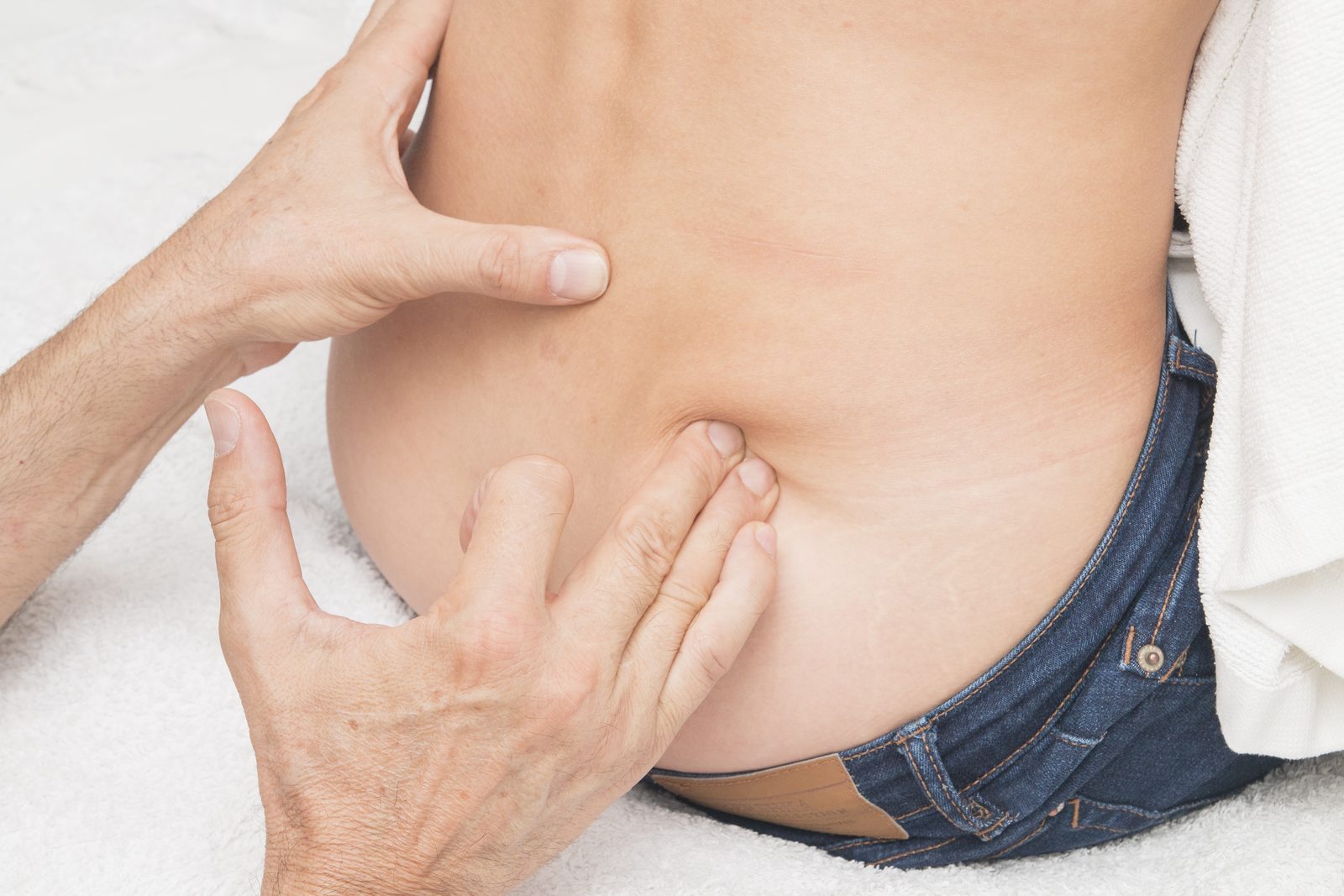
Person with hip pain from tight hip flexors — High Amplitude Health San Mateo
Drug-Free Relief
Chiropractic · ART · Soft tissue therapy

How We Treat It

Sometimes it’s alignment.
Sometimes it’s what’s pulling on it.

◎
Chiropractic pelvic & hip adjusting
Gentle, precise hip adjustments to the pelvis and hip joint correct alignment issues that put uneven pressure on one side — often the real reason one hip feels "off" compared to the other.
Especially effective for functional hip unevenness caused by muscle imbalance rather than a structural leg-length difference.
◈
Active Release Therapy (ART)
ART directly targets the hip flexors, glutes, and IT band — the muscles most often responsible for hip bursitis flare-ups and the tight, restricted feeling that limits how far you can comfortably move.
Runners, cyclists, and anyone who sits most of the day tend to see the fastest results here.
⟳
Myofascial & trigger point therapy
Sustained-compression myofascial therapy is one of the two tools Dr. John relies on most for hip pain — releasing the glute medius, glute minimus, TFL, and the tension held in the tendons around the SI joints. Because tight muscles can transmit tension through the fascia to nearby tendons and joints, this often relieves pain that seemed to be coming from somewhere else entirely.
Paired with Active Release Therapy, this combination handles the bulk of the muscle and tendon tension driving most hip pain we see.
▷
Assisted stretch therapy
Assisted stretching of the glutes and hamstrings is an integral part of treatment — releasing tension in these large muscle groups more effectively than you can on your own, and taking pressure off the hip flexors and SI joints they connect to.
We also teach you which stretches to keep doing at home between visits.
◇
Glute & core activation retraining
Weak glutes force the hip flexors and lower back to overcompensate during walking and running, which is one of the most common reasons hip pain keeps returning after it seems to resolve.
This is the step most people skip on their own — and it's usually what makes relief actually stick.
▸
Vibration therapy
Once the deeper muscle and tendon work is done, targeted vibration further decreases any locked-in muscle tone that's still lingering — especially in the glutes and hip flexors — and helps the joint work that follows go more smoothly.
Also useful earlier in a visit for acute bursitis flares, calming an overactive, guarding muscle before deeper soft tissue work begins.
Who It Helps

Alignment problem,
or muscle problem?

Hip pain has a handful of common, treatable causes — here's what we see most often in San Mateo patients.

01

Hip bursitis

Inflammation of the fluid-filled sac cushioning the hip joint, usually aggravated by tight surrounding muscles pulling on the joint — common in patients who sleep on their side or sit for long stretches. We break down why this specifically flares up at night in more detail.

02

Sacroiliac (SI) joint tension

The SI joints connect your pelvis to your spine, and the tendons around them can hold real tension of their own — often pulled tight by nearby muscles like the glute medius, glute minimus, and TFL through the surrounding fascia. This kind of tension-through-connection is easy to miss, since the ache can show up away from where the actual tightness is.

03

Tight hip flexors from desk sitting

Hours in a chair shorten the hip flexors and pull the pelvis forward, creating a dull ache that's often worse first thing in the morning or after standing up from sitting.

04

Uneven hip alignment

One hip sitting higher than the other is usually a functional imbalance from muscle tightness on one side, not a true leg-length difference — and it typically responds well to targeted care.

05

Overuse from running or cycling

Runners and cyclists place repetitive load on the hip flexors and IT band, leading to gradual tightness and pain that builds up rather than starting from a single injury.

06

Piriformis-related hip and buttock pain

A tight piriformis muscle deep in the hip can mimic hip joint pain or even radiate down toward the leg — Active Release Therapy is particularly effective here.

07

Weak glutes and core

When the glutes aren't doing their share of the work, the hip flexors and low back take over — a pattern that leads directly to recurring hip pain, especially with walking or stairs.

08

Compensation from lower back or knee issues

Pain or restriction elsewhere in the kinetic chain often causes the hip to move differently to compensate, which can create hip pain that started somewhere else entirely.

Find what's actually
pulling on it.

Most patients with muscle- or alignment-related hip pain notice meaningful improvement within just a few visits. Dr. John will identify exactly what's driving your pain — and fix it at the source.

3–5
Average sessions to resolution
89+
Five-star Google reviews

Serving San Mateo, Burlingame, Foster City, Redwood City, Belmont & surrounding areas since 2010.

Book Your First Visit →
About Dr. John Blenio

16 years telling the difference
between alignment and muscle

Dr. John Blenio has treated hip pain in San Mateo patients for over 16 years — from desk workers with chronically tight hip flexors to runners and cyclists managing overuse-related bursitis. His approach combines spinal and pelvic adjusting with Active Release Therapy and corrective exercise into one integrated plan.

Hip pain is rarely just a joint problem. It's usually a combination of muscle tightness — often concentrated in the glute medius, glute minimus, TFL, and the tendons around the SI joints — alignment, and movement pattern. Because tight muscles can transmit tension through the fascia to nearby tendons and joints, Dr. John treats the whole connected region rather than just the spot that hurts: sustained-compression myofascial therapy and Active Release Therapy first, assisted stretching of the glutes and hamstrings, vibration therapy to release any lingering muscle tone, and — for most patients — chiropractic adjusting to the lumbar spine and hips to finish restoring joint motion.

Whether your hip pain started last month or has been building for years, the goal is the same: find the true cause, correct it with hands-on care, and give you the tools to keep it from coming back.

✓
Chiropractic Pelvic & Hip Adjusting 16+ years of precision adjusting for hip and pelvic alignment
✓
ART Certified — Hip & Lower Extremity Targeting the hip flexors, glute medius/minimus, TFL, and IT band
✓
Corrective Exercise & Rehab Specialist Glute and core retraining to prevent recurrence
Dr. John Blenio — Hip Pain Specialist, High Amplitude Health San Mateo
Frequently Asked Questions

Before you book,
a few honest answers

Can a chiropractor actually help with hip pain? +
Yes, for the most common causes of hip pain — tight hip flexors, hip bursitis, uneven hip alignment, and piriformis-related tension. As a chiropractor for hip adjustment and soft tissue care, Dr. John combines chiropractic adjusting with Active Release Therapy and myofascial work to address the muscle and joint restrictions actually driving the pain, not just mask it.
What's the difference between hip pain and lower back pain? +
They're often connected, but not the same thing. Hip pain typically centers on the outer hip, groin, or buttock and worsens with walking, climbing stairs, or lying on that side, while lower back pain centers on the spine itself. Because the muscles around the hip and low back work together, Dr. John evaluates both areas at your first visit rather than assuming which one is the true source.
Can chiropractic care help hip bursitis? +
Often, yes. Hip bursitis is frequently aggravated by tight surrounding muscles pulling on the joint. Releasing that tension with Active Release Therapy and myofascial work, combined with correcting any pelvic misalignment, can reduce the irritation causing the bursitis to flare in the first place.
Can uneven hips actually be corrected? +
In many cases, what feels like uneven hips is a functional imbalance — tight muscles on one side pulling the pelvis out of alignment — rather than a structural difference in leg length. Functional imbalances typically respond well to chiropractic adjusting and targeted soft tissue work. Dr. John will assess which type you have at your first visit.
How many visits does it take to feel better? +
Most patients with muscle- or alignment-related hip pain notice meaningful improvement within 3-5 visits. Longstanding or activity-related hip pain (from running, cycling, or years of desk sitting) can take a bit longer since the tightness took time to develop, but the same combination of adjusting and soft tissue work applies.
Is hip pain from running or sports something you treat? +
Yes. Tight hip flexors and glute weakness from running, cycling, or repetitive sports movements are among the most common causes of hip pain we see. Treatment combines hands-on release work with exercises to correct the movement pattern causing the strain, so the pain doesn't simply return once you're back to training.
When should I see a doctor instead of a chiropractor for hip pain? +
If hip pain follows a fall or injury, comes with significant swelling, fever, or inability to bear weight, or if you have advanced arthritis or a suspected labral tear, see a physician first. Dr. John will tell you plainly at your first visit if your case looks like it needs imaging or a referral rather than chiropractic care.
Do I have to be adjusted, or can I still get better if I'd rather not be? +
Chiropractic adjusting to the lumbar spine and hips is genuinely helpful here — it's usually the step that speeds things along fastest once the surrounding muscle and tendon tension has been released — so Dr. John does recommend it for most patients. It's never required, though. If you'd rather not be adjusted, he can still get you out of pain using sustained-compression myofascial therapy, Active Release Therapy, assisted stretching, and vibration therapy on their own. Adjusting just tends to speed up the process.

Don't spend another day
held back by hip pain.

Join hundreds of San Mateo patients who've found lasting relief from hip pain and bursitis — without drugs, injections, or surgery — using Dr. John's hands-on, root-cause approach.

Schedule an Appointment

Or call / text us: 650-735-1716